A learning portfolio should show how a learner thinks and develops, rather than simply collect attractive classroom photographs. Choose evidence that helps a teacher explain a next step.
A practical starting point
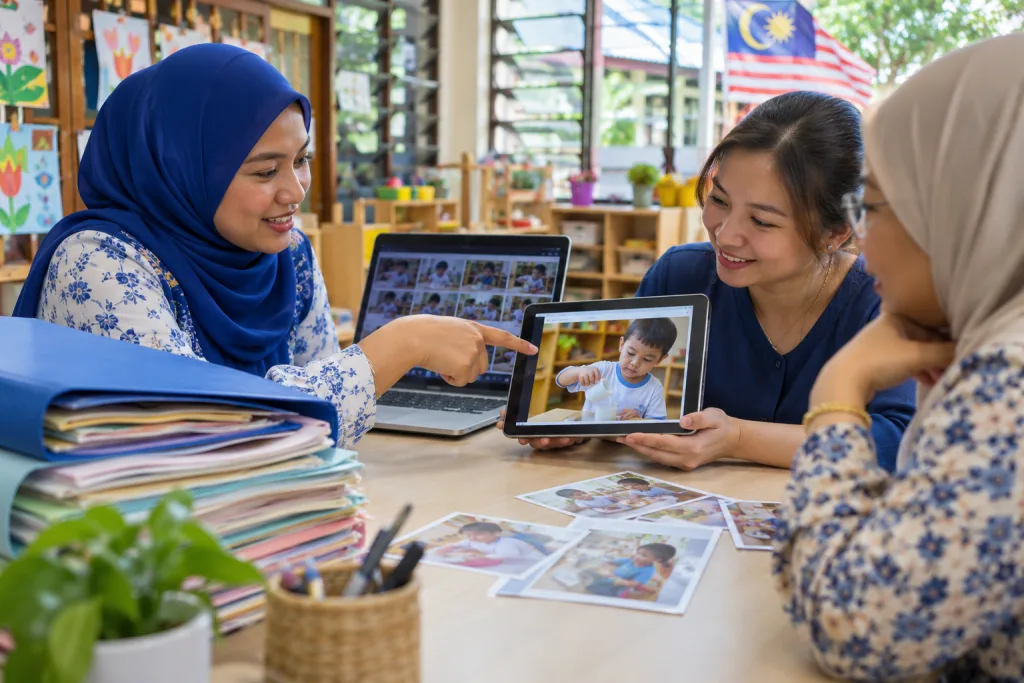
A kindergarten has hundreds of photos but cannot quickly find an example of a child attempting a new task independently. Reorganising around learning intentions makes the evidence easier to discuss.
Turn the idea into a working routine
- Choose one learning intention and describe what observable progress would look like in ordinary classroom activity.
- Attach a short teacher observation to each selected photo, explaining what the learner did without inferring an ability from appearance.
- Review a small set of evidence with the family and agree one attainable next step for the following month.
Measure what matters
Compare how quickly teachers can retrieve an example that supports an observation. Count useful observations, not total uploads.
A busy photo stream can hide the learning story. Avoid labelling a child’s overall development from one attractive image.
What should the team agree before putting this into practice?
Agree what evidence you need, who may view it and when older records will be reviewed. Start with a manageable collection.
MAKE IT PRACTICAL
Your planning checklist
Use this checklist during a team discussion. It tracks your planning progress, not a score of your institution’s quality. Selections stay in this page and are not submitted.
A thoughtful observation gives a photograph its educational value.
About this archive: 15 January 2024 is the collection’s reference date. This article was prepared and published on 7 November 2026. It is AI-assisted editorial content; examples are illustrative and do not describe a specific customer deployment.