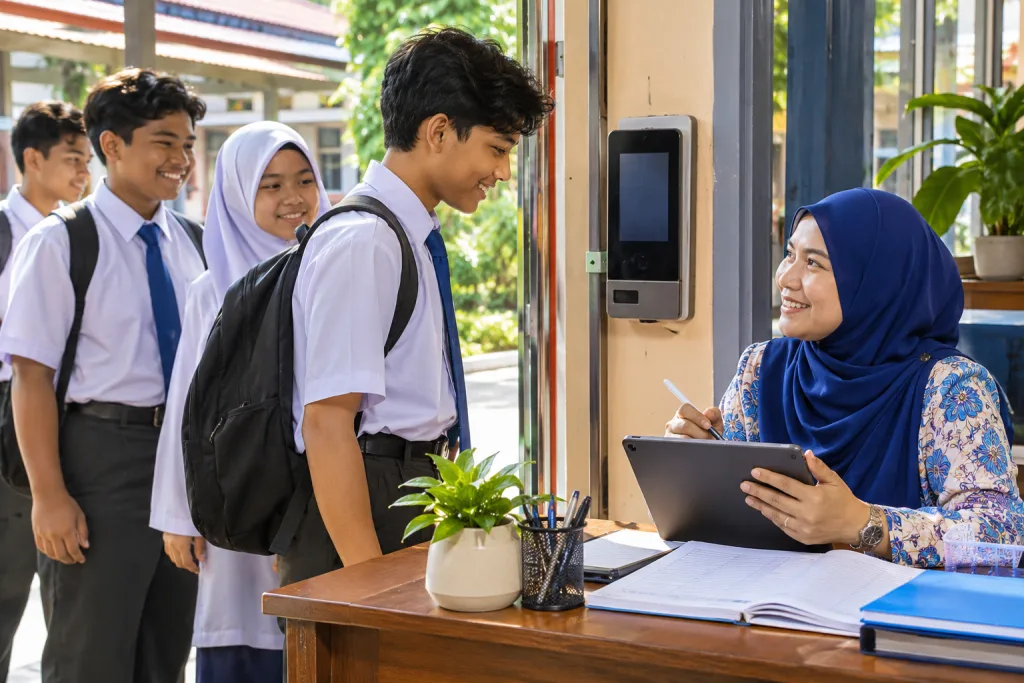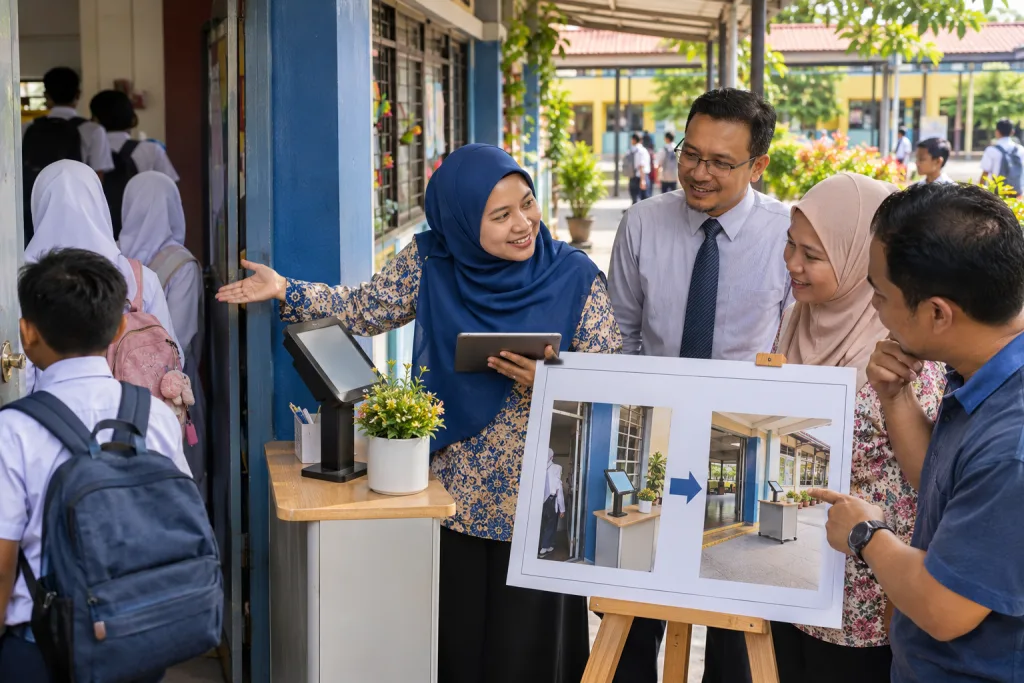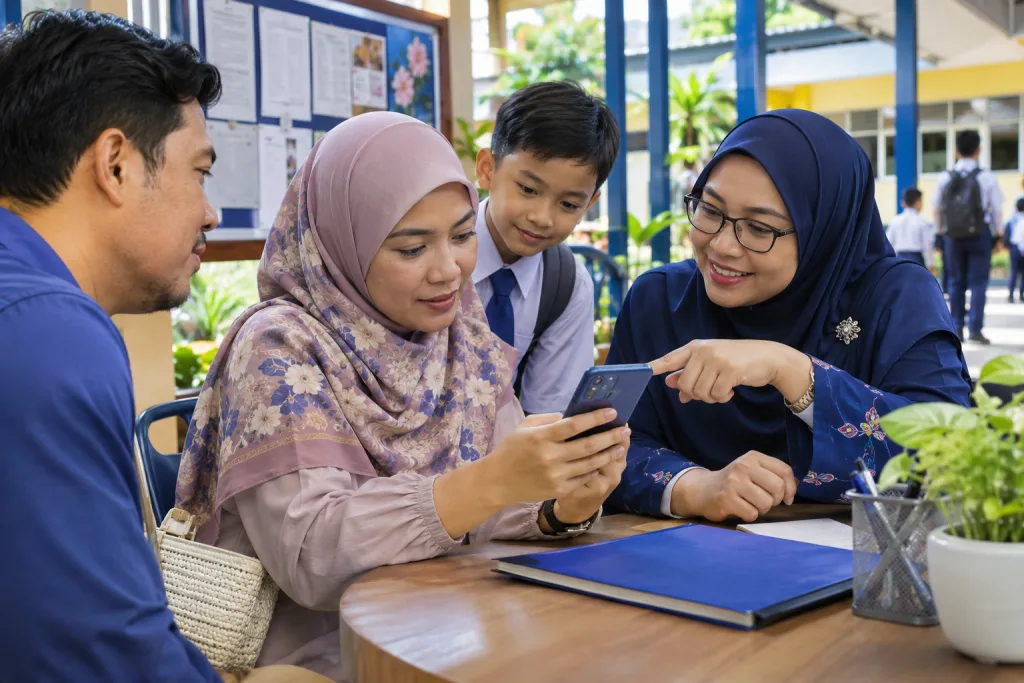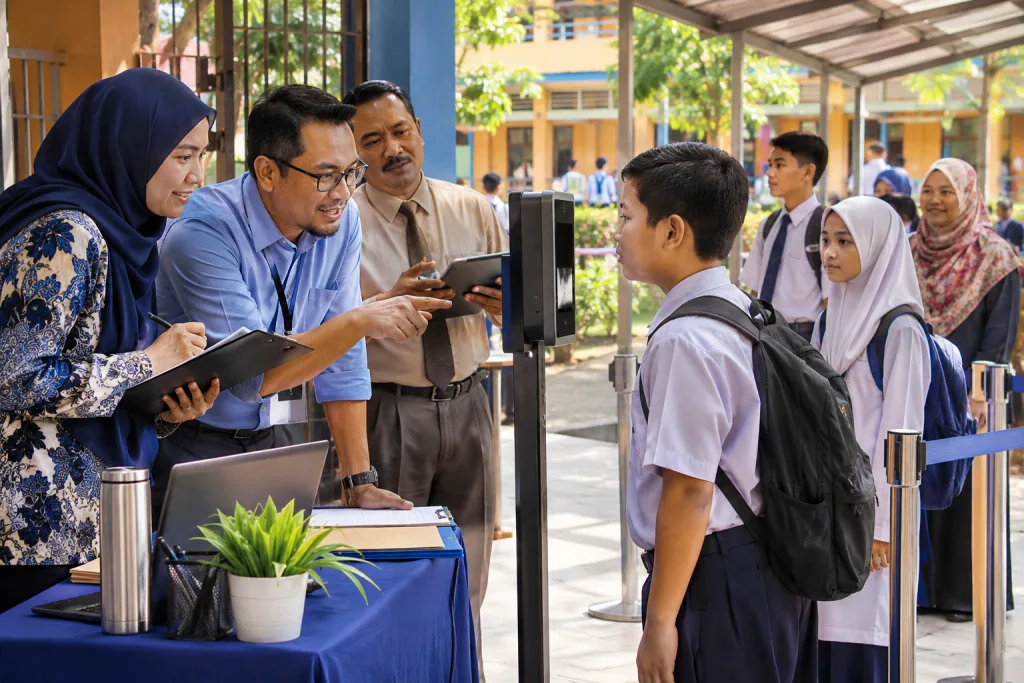
A face recognition attendance pilot should test the full arrival routine, including unsuccessful recognition and staff assistance. Device speed alone does not describe the school-day experience.
A practical starting point
A school tests a terminal with a few adults indoors, then finds the actual entrance has different light, learner heights and arrival queues.
Turn the idea into a working routine
- Observe the real arrival route and identify where a terminal could be used without obstructing movement.
- Test the agreed device configuration with authorised participants and a clear staff-assisted fallback.
- Review successful records, exceptions and parent messages before expanding the pilot.
Measure what matters
Measure the complete check-in journey and the work required to resolve exceptions. Keep observations tied to the tested conditions.
A demonstration result in one environment should not be treated as a guarantee for every entrance or learner.
What should the team agree before putting this into practice?
Agree the pilot scope, authorised participation and exception process before collecting any attendance data.
MAKE IT PRACTICAL
Your planning checklist
Use this checklist during a team discussion. It tracks your planning progress, not a score of your institution’s quality. Selections stay in this page and are not submitted.
Test the routine around the device, not only the device itself.
About this archive: 27 February 2025 is the collection’s reference date. This article was prepared and published on 7 November 2026. It is AI-assisted editorial content; examples are illustrative and do not describe a specific customer deployment.